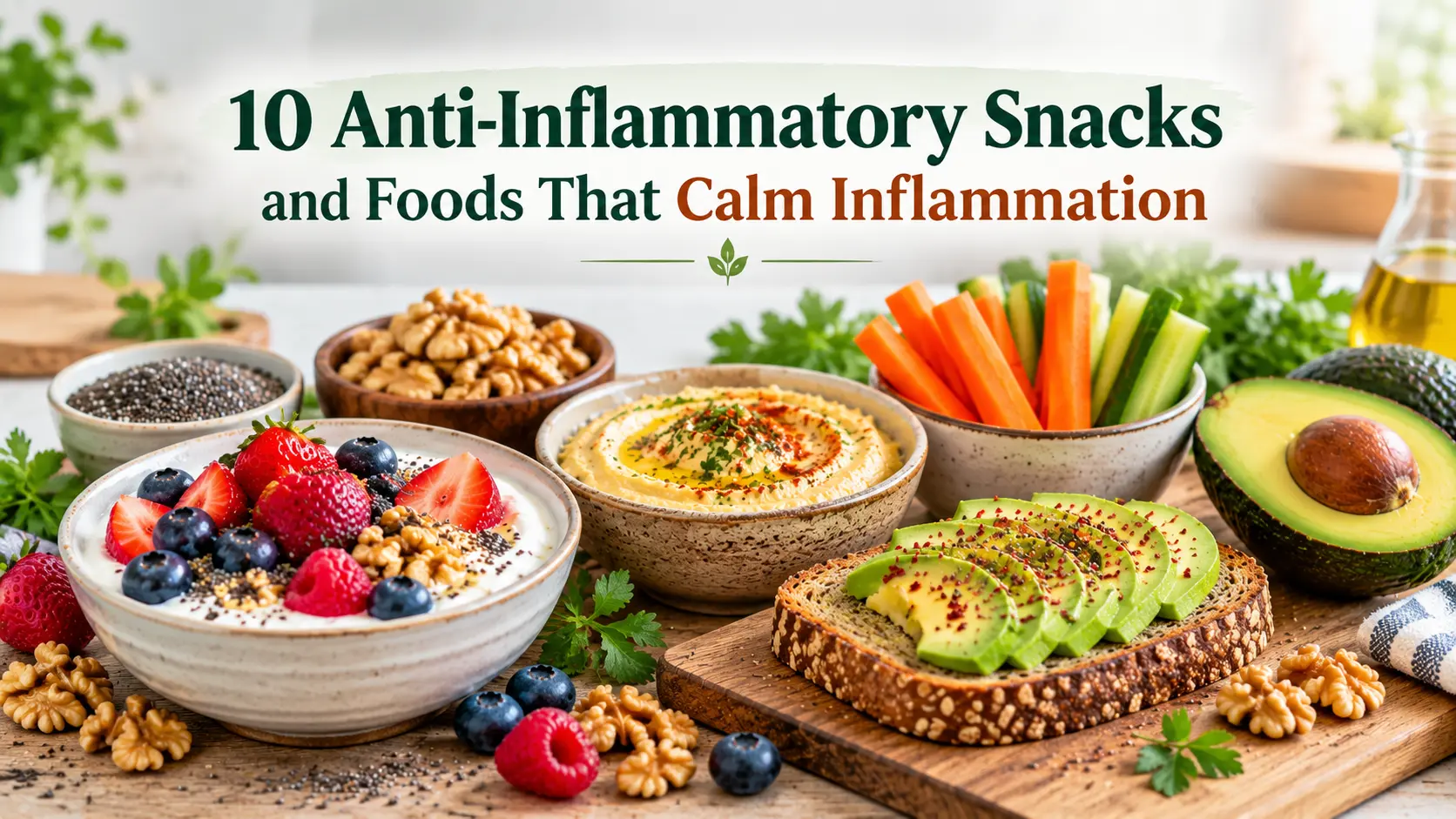
Anti-Inflammatory Snacks to Help Calm Inflammation Naturally
If you need something quick between meals, a few simple choices can fit a nutrient-rich eating pattern without turning snack time into a nutrition project. Think apple with peanut butter, vegetables with hummus, fruit, or avocado on whole-grain toast.
No single food needs to be eaten to follow an anti-inflammatory eating pattern. Harvard’s Nutrition Source describes the approach as a flexible way of eating that emphasizes fruits, vegetables, whole grains, legumes, nuts, seeds, unsaturated oils, herbs, spices, and oily fish while limiting foods such as sugary drinks, fried foods, refined carbohydrates, and processed meats.
That distinction matters when choosing snacks. Instead of asking whether a particular food can “cure” inflammation, it makes more sense to ask whether it provides useful nutrients and fits with the rest of your meals.
What Makes a Snack Fit an Anti-Inflammatory Diet?
A useful snack usually combines minimally processed ingredients with nutrients such as fiber, protein, or unsaturated or healthy fats.
Common choices include:
- Fruits and vegetables
- Nuts and seeds
- Legumes
- Whole grains
- Olive oil
- Fish and seafood
- Plain dairy or fortified alternatives
- Herbs and spices
Harvard notes that the overall dietary pattern is more important than concentrating on one food or nutrient. Foods in this pattern provide fiber, phytochemicals, antioxidants, and other nutrients that can contribute to a balanced diet.
This also explains why a snack does not need to carry an “anti-inflammatory” label. A basic combination made at home can be just as relevant as a packaged food marketed around wellness.
Anti-Inflammatory Foods and Snacks to Eat
For people looking for the anti-inflammatory benefits & options, variety is more useful than choosing one favorite ingredient. The following combinations cover fruit, vegetables, legumes, whole grains, seeds, nuts, seafood, and other foods commonly included in this style of eating.
| Snack | What it provides | Preparation |
|---|---|---|
| Fruit | Fruit, protein | Easy |
| Apple with peanut butter | Fiber, protein, unsaturated oils | Easy |
| Nuts with fruit | Nuts and plant nutrients | None |
| Carrots with hummus | Vegetables, legumes | Easy |
| Celery with almond butter | Vegetable, protein, unsaturated oils | Easy |
| Avocado on whole-grain toast | Whole grains and plant fats | Moderate |
| Chia pudding with fruit | Fiber and omega-3 acids | Prepare ahead |
| Crunchy roasted chickpeas | Plant-based protein and fiber | Moderate |
| Edamame with turmeric | Protein and fiber | Easy |
| Pear with almonds | Fruit, fiber, nuts | None |
| Tuna salad with whole-grain crackers | Lean protein and whole grains | Easy |
| Air-popped popcorn | Whole grain | Easy |
These choices are examples rather than a prescribed menu. The goal is to add more nutrient-dense foods across the day instead of treating one snack as a special remedy. Harvard similarly emphasizes variety rather than relying on individual foods.
10 Easy Anti-Inflammatory munchies Ideas
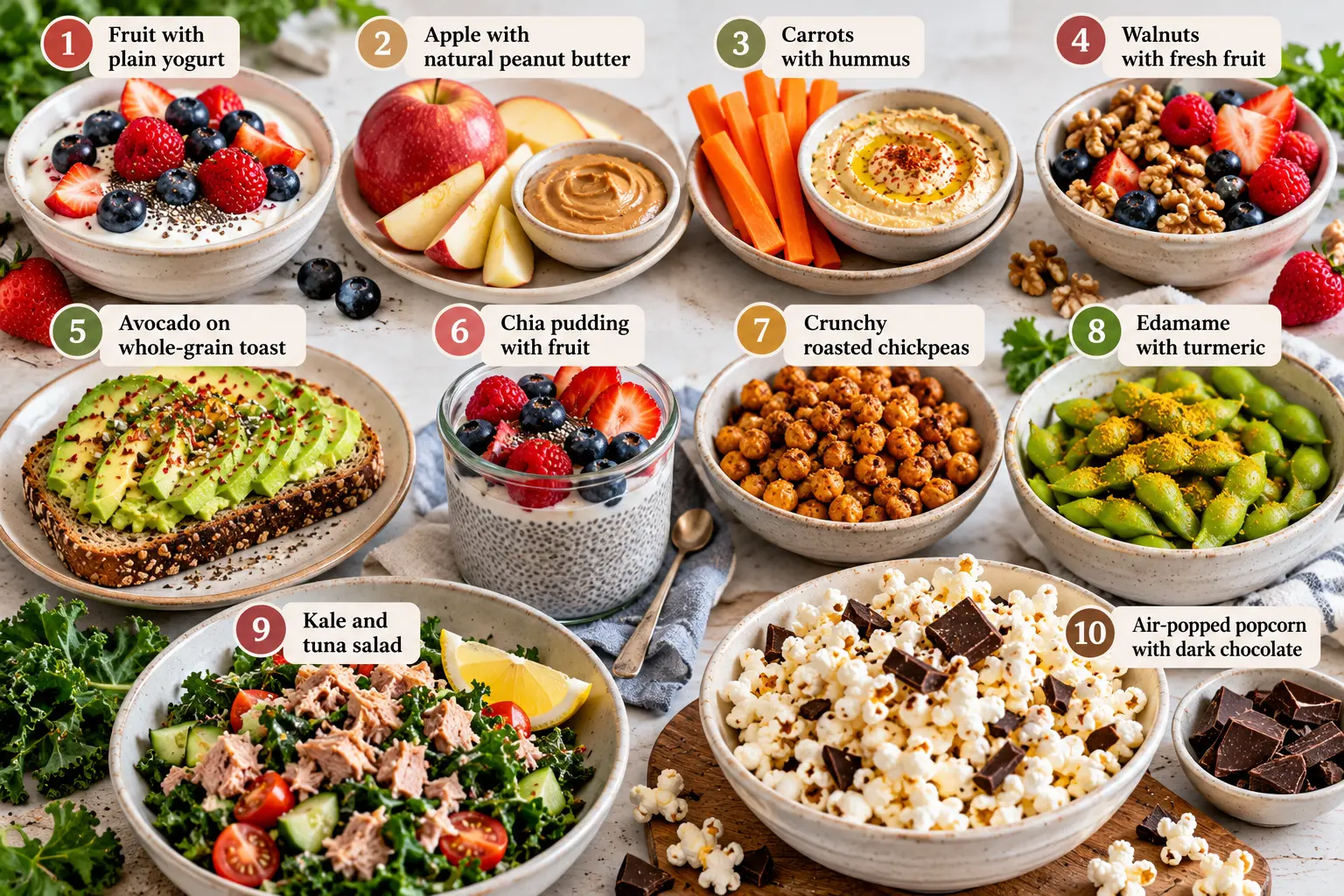
Here are ten practical snack ideas that work for different tastes, preparation times, and levels of hunger. Some are sweet, while others work better as a savory snack.
1. Fruit with plain yogurt
Fresh or frozen fruit can be combined with plain yogurt for a simple snack. Choose an unsweetened variety when appropriate and add cinnamon, seeds, or a small amount of chopped nuts for extra texture.
2. Apple with natural peanut butter
An apple needs almost no preparation. A spoonful of natural peanut butter makes it more substantial and adds protein and unsaturated oils.
Check the ingredient list if you are trying to avoid unnecessary sugars.
3. Carrots with hummus
Carrots provide a convenient vegetable option, while hummus adds tahini. Together, they provide fiber and plant-based protein.
This is particularly useful when you want something crunchy rather than sweet.
4. Walnuts with fresh fruit
A small portion of walnuts paired with an apple, pear, or orange creates a portable combination. It also provides alpha-linolenic acid, a plant-based omega-3 acid.
5. Avocado on whole-grain toast
Mashed avocado spread over whole-grain toast makes a more filling snack. Whole grains contribute fiber, while it provides monounsaturated oils.
This can work well when several hours remain before your next meal.
6. Chia pudding with fruit
Chia seeds absorb liquid and create a pudding-like texture when refrigerated. Mix them with milk or an unsweetened alternative and add fruit before serving.
Salba provides fiber and alpha-linolenic acid.
7. Crunchy roasted chickpeas
Roasting garbanzo beans creates a crisp texture that can replace the crunch people often look for in chips. Season them with herbs, paprika, turmeric, or other spices.
Keep an eye on the salt if you are using packaged or heavily seasoned versions.
8. Edamame with turmeric
Shelled edamame is easy to prepare from frozen and can be eaten warm or chilled. It provides protein and fiber, making it useful when fruit alone does not feel filling enough.
Turmeric adds flavor, but using a spice does not turn a snack into a treatment.
9. Kale and tuna salad
For a more substantial option, combine chopped kale with tuna and a simple dressing. You can serve it on its own or with whole-grain crackers.
Kale adds a leafy green vegetable, while tuna contributes protein. For regular seafood meals, fatty fish such as salmon, sardines, and mackerel are especially useful sources of marine omega-3 fatty acids.
10. Air-popped popcorn with dark chocolate
Yes, popcorn can fit this eating pattern. Plain air-popped popcorn is a whole grain, so the main consideration is what you add to it.
Keep butter and excess salt modest, and pair a small portion with chocolate if you want something sweet. Harvard lists chocolate containing at least 70% cocoa solids among foods that can fit the pattern.
Good Snacks for an Anti-Inflammatory Diet When You’re on the Go
Some good options to buy or pack for work require almost no preparation.
Try:
- Unsalted or lightly salted nuts
- Whole fruit
- Single-serve nut butter
- Roasted chickpeas
- Edamame
- Whole-grain crackers
- Seeds
- Plain yogurt kept refrigerated
- Simple tuna packets
- Air-popped popcorn
For packaged foods, read the Nutrition Facts panel and ingredient list rather than relying on words such as “natural” or “healthy.”
Pay particular attention to serving size, sodium, sugar, saturated fat, fiber, and the first several ingredients. USDA MyPlate recommends snacks that provide useful nutrients while keeping sugars, saturated fat, and sodium in check.
Snacks to Limit: Inflammatory Foods and Choices That May Cause Inflammation
There is no need to create a permanent forbidden-food list. Instead, consider how often certain choices appear in your normal eating pattern.
Foods worth limiting include:
- Sugar-sweetened beverages
- Deep-fried snacks
- Highly refined grain products
- Processed meats
- Foods high in saturated fat
- Snacks with large amounts of added sugars
- Highly processed convenience foods
Harvard specifically identifies refined carbohydrate foods, fried foods, processed high-fat meats, sugary beverages, and excess saturated fat among foods commonly limited in this eating pattern.
Eating a cookie or having fries occasionally does not suddenly make the rest of your diet unhealthy. Frequency and the overall pattern matter more than assigning a permanent label to individual foods.
How to Build a Balanced Snack
A simple way to build a satisfying snack is to combine a source of protein and fiber with fruit, vegetables, whole grains, or another minimally processed food.
Examples include:
- Apple + peanut butter
- Fruit
- Carrots + hummus
- Pear + almonds
- Whole-grain crackers + tuna
- Whole-grain toast
This is a practical guideline, not a medically validated formula. Your ideal portion depends on hunger, activity, meal timing, energy needs, and individual dietary requirements.
For someone who wants to fight chronic inflammation through food choices, the bigger opportunity is building this type of balance across meals rather than searching for a single powerful snack.
What Does Research Say About Inflammation and Foods That May Help?
The evidence is stronger for dietary patterns than for individual foods. A Mediterranean diet, for example, combines vegetables, fruit, legumes, nuts, whole grains, olive oil, seafood, herbs, and other foods that are also commonly discussed in this context.
A 2026 systematic review and meta-analysis of randomized controlled trials found that Mediterranean-style eating reduced some inflammatory biomarkers, including high-sensitivity C-reactive protein, IL-6, and IL-17, although effects were not consistent across every marker studied.
That distinction is important. Research on a dietary pattern cannot automatically prove that one particular snack will lower inflammation.
| Claim | What the evidence supports |
|---|---|
| Certain foods may help fight inflammation | They can form part of a nutrient-rich dietary pattern. |
| Berries are especially beneficial | Fruit fits the overall pattern, but one food should not be treated as a therapy. |
| Nuts provide useful nutrients | Yes, including unsaturated oils, fiber, protein, vitamins, and minerals. |
| One snack may reduce inflammation | Evidence does not establish this for an individual snack. |
| Food can replace medical treatment | Diet should not be presented as a substitute for appropriate medical care. |
The practical takeaway is to add a wider range of fruits, vegetables, legumes, whole grains, nuts, seeds, seafood, and other minimally processed foods rather than focusing on a single ingredient.
How Often Should You Eat These Snacks?
There is no universal number of snacks that everyone needs.
Some people feel comfortable eating three meals without snacks. Others become hungry between meals and benefit from something small.
Consider:
- Hunger
- Activity level
- Meal timing
- Overall energy needs
- Personal preferences
- Dietary requirements
A snack should serve a purpose. If you are not hungry, there is no nutritional requirement to eat simply because a food is considered healthy.
What to Look for When Buying Packaged Snacks
When shopping, look beyond the front of the package.
Look for
- Whole grains
- Nuts or seeds
- Fruits or vegetables
- Fiber
- Protein
- Unsaturated oils
- Unsweetened or lightly sweetened options
Watch for
- Large amounts of added sugars
- Excess sodium
- High saturated fat
- Refined ingredients
- Very small serving sizes
A product does not need to be perfect to fit your diet. The ingredient list and Nutrition Facts panel simply give you more information for making an informed choice.
Frequently Asked Questions About Anti-Inflammatory Munchies
If you are comparing snack ideas, these are some of the questions that come up most often.
What are the top anti-inflammatory snacks?
Options include fruit with plain yogurt, apples with peanut butter, vegetables with hummus, nuts with fruit, edamame, salba pudding, avocado toast, and simple tuna salad.
What are 10 foods that fight inflammation?
Foods commonly included in this type of eating pattern include berries, leafy greens, legumes, salba seeds, extra virgin olive oil, fatty fish, whole grains, avocado, and turmeric. They should be viewed as parts of an overall dietary pattern rather than individual treatments.
Can I eat popcorn on this diet?
Yes. Plain air-popped popcorn is a whole grain and can work as a snack. The main consideration is how much butter, salt, or other toppings are added.
What are some good anti-inflammatory snacks to buy?
Look for simple packaged choices such as unsalted nuts, seeds, whole-grain crackers, plain popcorn, roasted legumes, or single-serve nut butter. Compare the Nutrition Facts panel and ingredient list before buying.
What is the best anti-inflammatory snack?
There is no single choice that is best for everyone. A useful option is one that combines foods such as fruit or vegetables with protein, fiber, or unsaturated oils and fits your nutritional needs.
Are nuts good for inflammation?
Nuts can fit well into a Mediterranean-style eating pattern. They provide protein, fiber, minerals, and unsaturated oils. Walnuts also provide a plant-based omega-3 fatty acid.
Is dark chocolate anti-inflammatory?
Black chocolate with a high cocoa content can fit within this dietary pattern, but that does not mean chocolate should be treated as a treatment for inflammation. Harvard lists chocolate containing at least 70% cocoa solids among foods that may fit the pattern.
How an Anti-Inflammatory Eating Pattern May Help Calm Inflammation Naturally?
The most useful approach is to think about what appears on your plate throughout the week. Fruits, vegetables, legumes, whole grains, nuts, seeds, olive oil, and seafood can provide a broad range of nutrients and plant compounds.
A snack can support that pattern, but it does not need to carry the entire burden. A piece of fruit, some nuts, vegetables with hummus, or whole-grain crackers with tuna can be perfectly reasonable choices.
Research on Mediterranean-style eating suggests that dietary patterns can influence some inflammatory markers, but the evidence does not support presenting any individual snack as a treatment.
If you have a diagnosed inflammatory condition, food allergies, diabetes, kidney disease, or another condition requiring dietary restrictions, discuss significant dietary changes with your healthcare professional.
