

FemiCore Reviews: Ingredients, Benefits, Side Effects, Price and Does It Work?
Bladder and urinary concerns can be frustrating, especially when they start affecting everyday routines. With so many supplements promising better urinary wellness, it can be difficult to tell which claims are supported by evidence and which are simply marketing. That is where FemiCore Reviews comes in. FemiCore is marketed as a daily supplement for women, combining probiotic strains and botanical ingredients to support urinary and bladder wellness.
But does the formula itself have enough evidence behind it, and does research actually support the ingredients? In this review, we take a closer look at FemiCore, its ingredients, potential benefits, safety considerations, pricing, customer claims, and the evidence behind the finished product, so you can decide whether it deserves your consideration.
FemiCore Reviews: Quick Summary
| Category | Our assessment |
|---|---|
| Product type | Dietary supplement for women’s urinary and bladder wellness |
| Format | Capsule |
| Serving | 1 capsule daily, according to the current product page |
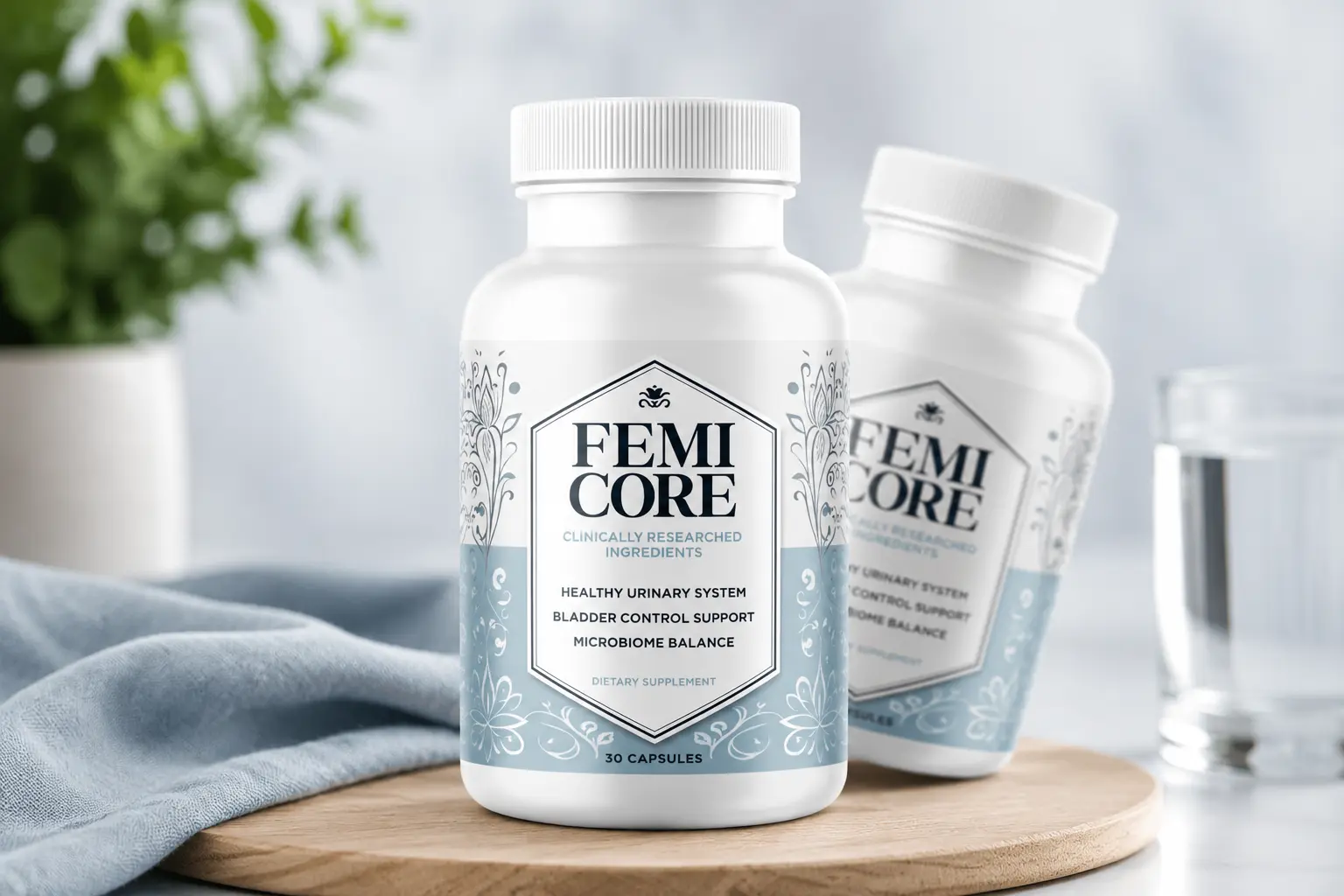
| Bottle size | 30 capsules |
| Main approach | Botanical ingredients plus Lactobacillus probiotic strains |
| Current listed price | $69 for 1 bottle, $59 per bottle for 3, $49 per bottle for 6 |
| Guarantee | 60-day money-back guarantee, according to the published refund policy |
| FDA approved? | No. Dietary supplements are not FDA approved for safety and effectiveness before marketing. |
| Finished-product clinical evidence | I could not verify an independent randomized controlled trial specifically testing the current FemiCore formula. |
| Overall assessment | Interesting ingredient concept, but product-specific evidence and formulation transparency deserve careful consideration. |
The most important point is that promising research on cranberry, probiotics, or another ingredient does not automatically prove that FemiCore itself produces the same results.
What Is FemiCore?
FemiCore is a dietary supplement marketed to women seeking support for bladder comfort, urinary wellness, and urinary microbiome balance. The current official product information describes a once-daily capsule containing four botanicals and five Lactobacillus strains.
The product’s marketing presents the formula as a microbiome-focused approach rather than a conventional medication. It claims to support urinary balance, bladder control,l and comfort.
Those are marketing claims, however. A supplement’s intended purpose is not the same thing as clinical evidence demonstrating that it prevents or treats a medical condition.
FemiCore should therefore be viewed as a dietary supplement rather than a treatment for urinary tract infections, overactive bladder, urinary incontinence, or other diagnosed conditions.

What Are the FemiCore Ingredients?
The current product information reviewed describes four botanical ingredients:
- Mimosa pudica
- Cranberry extract
- Bearberry, also called uva ursi
- Granular berberine hydrochloride extract
It also lists five Lactobacillus strains:
- Lactobacillus crispatus
- Lactobacillus acidophilus
- Lactobacillus plantarum
- Lactobacillus gasseri
- Lactobacillus casei
The product page describes these as a combined botanical and probiotic formula.
There is an important transparency issue, though. The same current FemiCore website also contains a separate ingredient section mentioning D-mannose, hibiscus, buchu, marshmallow root, nettle, vitamin C, pumpkin seed, and turmeric. That conflicts with the page’s more explicit description of the four-botanical, five-probiotic formula.
Because of that inconsistency, we would not combine both lists and claim that all of those ingredients are in the same current FemiCore formula. Consumers should check the Supplement Facts panel on the product they are actually purchasing.
Lactobacillus Probiotic Blend
Lactobacillus species are being studied in relation to the female urogenital microbiome and recurrent urinary tract infections. However, probiotic effects can be highly strain-specific.
Research involving one Lactobacillus strain cannot automatically be applied to every strain in FemiCore, and research involving a particular probiotic product does not establish that FemiCore produces the same result.
Some clinical research has found potential benefits from particular probiotic preparations, while other research has produced less conclusive results. A recent systematic review of randomized trials described probiotics as promising but noted substantial variation among studies and formulations.
Cranberry Extract
Cranberry is one of the better studied ingredients in this category.
Cranberries contain compounds called proanthocyanidins, or PACs, which have been studied for their ability to interfere with the attachment of certain bacteria to urinary tract tissues.
The evidence is not uniform, but a 2023 Cochrane review found that cranberry products can reduce the risk of symptomatic, culture-confirmed recurrent UTIs in women with previous recurrent infections. NCCIH also notes that cranberry may help some women prevent recurrent UTIs, while emphasizing that it does not treat an existing UTI.
Importantly, those findings concern cranberry products studied in research. They do not prove that the amount or form of cranberry in FemiCore produces the same effect.
Bearberry, or Uva Ursi
Bearberry is a traditional botanical associated with urinary health. It contains compounds including arbutin.
However, traditional use is not the same as high-quality clinical evidence demonstrating that bearberry in a particular supplement improves bladder symptoms or prevents infections.
This ingredient also deserves particular attention when considering safety and duration of use. The fact that an ingredient is plant-derived does not automatically mean that it is appropriate for everyone.
Berberine
Berberine is a plant-derived compound that has been investigated for several biological effects. Much of the human research has focused on areas such as blood glucose and lipid metabolism rather than establishing FemiCore’s urinary-health claims.
Berberine can also interact with medications. NCCIH notes that it may cause gastrointestinal side effects and should not be used during pregnancy or breastfeeding because of potential risks to the infant.
Therefore, research into berberine generally should not be interpreted as evidence that berberine treats bladder problems.
Mimosa Pudica
Mimosa pudica is a botanical ingredient included in the current FemiCore formula according to its product information. The manufacturer associates it with urinary wellness.
However, the presence of an ingredient in a supplement does not establish clinical effectiveness. We could not verify strong human clinical evidence showing that Mimosa pudica, specifically in FemiCore, improves bladder control or prevents recurrent UTIs.
What Is the Urinary Microbiome?
The urinary microbiome refers to the community of microorganisms associated with the urinary tract.
For years, conventional thinking often treated urine as essentially sterile. Modern microbiome research has changed that understanding, revealing microorganisms associated with the urinary tract even in people without obvious infection.
That does not mean that finding microorganisms in the urinary tract means someone has an infection.
It also does not mean that urinary symptoms can automatically be explained by an “imbalance” of bacteria.
Researchers are still studying how urinary microbial communities relate to conditions such as bladder symptoms and recurrent UTIs. The field is promising, but it is not yet a simple system where adding a few probiotic strains automatically restores a particular microbial balance.
That distinction is important when evaluating FemiCore’s microbiome-based marketing.
Does FemiCore Actually Work?
This is the most important question in our FemiCore Reviews analysis.
There is legitimate scientific research involving some of the ingredients used in the formula. Cranberry has evidence supporting a possible role in preventing recurrent UTIs in some women, and Lactobacillus probiotics have been investigated in this area as well.
But there is a major difference between:
“An ingredient has been studied.”
and:
“This finished product has been clinically proven to work.”
I could not verify an independent randomized controlled human trial specifically testing the current FemiCore formula.
That means it would be inappropriate to say that clinical research has proven FemiCore prevents UTIs or improves bladder control.
There are studies involving combinations of cranberry and probiotics, but those products used specific formulations and study protocols. For example, one randomized study examined a combination containing Lactobacillus paracasei, cranberry,y and D-mannose, while another studied a different probiotic and cranberry product. Neither study tested FemiCore.
So the evidence for FemiCore is best described as ingredient-supported rather than product-proven.
FemiCore Reviews and Customer Experiences
The FemiCore website displays testimonials from women describing improvements in bladder leakage and daily confidence.
These testimonials may represent genuine customer experiences, but they should not be confused with clinical evidence.
A person’s symptoms can change for many reasons, including changes in fluid intake, caffeine consumption, diet, physical activity, pelvic-floor exercises, other treatments, ts or natural symptom fluctuations.
Without a controlled study, it is impossible to determine whether FemiCore caused a reported improvement.
We also did not find sufficient independent evidence to treat online customer testimonials as representative of the typical FemiCore user.
For that reason, we would place considerably more weight on controlled human research than on testimonials.
FemiCore Side Effects and Safety
FemiCore contains multiple ingredients, so potential safety considerations need to be evaluated ingredient by ingredient.
Possible concerns include:
- Digestive symptoms such as bloating or stomach discomfort from probiotic products
- Individual sensitivity or allergic reactions
- Interactions involving berberine
- Safety concerns associated with certain herbal ingredients
- Potential interactions with prescription medications
- Special considerations during pregnancy or breastfeeding
The current product website says mild digestive adjustment or bloating can occur and describes these effects as temporary. However, that information should not be interpreted as proof that the finished product has been comprehensively tested for safety.
Berberine deserves particular caution. NCCIH reports that berberine can cause gastrointestinal side effects, interact with medications, and should not be used during pregnancy or breastfeeding.
If you take prescription medication, have kidney or urinary problems, are pregnant or breastfeeding, or have another medical condition, discuss the ingredients with a healthcare professional before using the supplement.
How Do You Take FemiCore?
The current product information describes FemiCore as a once-daily capsule, with 30 capsules representing approximately a 30-day supply. Another current product page specifies taking one capsule with water.
Because product formulations and instructions can change, follow the instructions printed on the current product label rather than relying solely on older online reviews.
Do not increase the serving because you want faster results.
FemiCore Price and Packages
Pricing can change, so the following reflects the current product information we could verify.
| Package | Reported Price | Approx. Cost Per Bottle | Shipping |
|---|---|---|---|
| 1 bottle | $69 | $69 | Small shipping fee |
| 3 bottles | $177 | $59 | Free U.S. shipping |
| 6 bottles | $294 | $49 | Free U.S. shipping |
The current official product page lists these package prices.
Another FemiCore-related product page currently displays different promotional pricing, which reinforces the need to verify the final checkout price before ordering.
FemiCore Refund Policy and Guarantee
A published FemiCore refund policy states that purchases are covered by a 60-day, 100% money-back guarantee. The policy says the request must be made within 60 days and that customers must return all bottles from the original order, including empty or partially used bottles, with proof of purchase.
The policy also states that:
- Return shipping is paid by the customer
- Original shipping costs, where applicable, are non-refundable
- Refunds are processed after the returned bottles are received and verified
- The published processing time is 5 to 7 business days
- Purchases from third-party marketplaces are not covered under the stated guarantee
These terms can change, so consumers should review the current refund policy before ordering.
A money-back guarantee can reduce financial risk, but it does not establish that a supplement is clinically effective.
Is FemiCore FDA Approved?
No.
FemiCore should not be described as an FDA-approved treatment.
The FDA explains that dietary supplements are not approved by the agency for safety and effectiveness before they are marketed. FDA does regulate aspects of the supplement marketplace, including manufacturing requirements, labeling requirements, ents and certain safety issues.
The FemiCore website uses terms such as “FDA-registered” and “FDA-compliant facility.”
Those terms should not be interpreted as FDA approval of FemiCore itself.
FDA registration, facility compliance, and FDA approval are different concepts.
Is FemiCore Legit or a Scam?
Based on the information we could verify, there is not enough evidence to simply label FemiCore a scam.
There is a product website, published product information, a stated refund policy, and identifiable purchasing information.
However, there are also reasons to approach the product carefully.
The biggest issue we identified is inconsistent product information. One current FemiCore website presents a four-botanical, five-probiotic formula, while another section of that same site lists a different group of ingredients.
That does not by itself establish fraud, but it does make checking the actual Supplement Facts label particularly important.
The second issue is evidence. We could not verify a randomized controlled clinical trial specifically testing the finished FemiCore formula.
Our conclusion is therefore:
FemiCore appears to be a real dietary supplement, but its marketing claims should not be confused with product-specific clinical proof.
FemiCore Pros and Cons
| Pros | Cons |
|---|---|
| Once-daily capsule format | Limited verified evidence for the finished formula |
| Contains cranberry and Lactobacillus strains that have been studied independently | Current online ingredient information is inconsistent |
| Includes a 60-day refund policy | Individual ingredient amounts are not clearly established from all available product information.n |
| Designed specifically for women’s urinary wellness | Ingredient research does not prove FemiCore works |
| Cranberry has some evidence for recurrent UTI prevention in certain women | Some ingredients may have safety or interaction considerations |
Who May Consider FemiCore?
FemiCore may be of interest to an adult woman who:
- Is researching dietary supplements for urinary wellness
- Is interested in probiotic or botanical approaches
- Has reviewed the ingredients and potential safety concerns
- Understands that supplements are not substitutes for medical care
- Wants to evaluate the evidence before making a purchase
That is different from recommending FemiCore as treatment.
FemiCore should not be used as a substitute for medical evaluation of urinary symptoms.
Who Should Speak With a Healthcare Professional First?
Talk with a healthcare professional before taking FemiCore if you:
- Are pregnant or breastfeeding
- Take prescription medications
- Have kidney disease
- Have recurrent UTIs
- Have significant urinary symptoms
- Have blood in your urine
- Have fever or chills
- Have back or flank pain
- Have painful urination
- Have a diagnosed bladder or urinary condition
Symptoms such as fever, blood in the urine, significant pain, or flank pain can require prompt medical evaluation.
Cranberry products, for example, are not treatments for an existing UTI. NCCIH specifically advises people who think they have a UTI to seek healthcare rather than relying on cranberry products.
FemiCore Reviews: Final Verdict
So, does FemiCore work?
The most accurate answer is: there is some scientific rationale behind several ingredients, but that is not the same as having strong clinical evidence for FemiCore itself.
Cranberry has meaningful research behind it for reducing recurrent UTI risk in some women, although results vary by product and population. Lactobacillus probiotics are also being studied, but effects differ substantially between strains and formulations.
For FemiCore specifically, we could not verify an independent randomized controlled trial demonstrating that the finished formula prevents UTIs, stops bladder leakage, or permanently changes the urinary microbiome.
The inconsistent ingredient information is another reason to check the current label carefully.
If you are considering FemiCore, evaluate the actual formula, ingredient amounts, safety considerations, current price, and refund terms rather than relying solely on testimonials or marketing claims.
Frequently Asked Questions
1. What is FemiCore?
FemiCore is a dietary supplement marketed toward women for bladder comfort, urinary wellness,s and urinary microbiome support. Current product information describes a formula containing four botanical ingredients and five Lactobacillus probiotic strains. It is marketed as a once-daily capsule and is not a prescription medicine or FDA-approved treatment.
2. What are the FemiCore ingredients?
The current product information identifies Mimosa pudica, cranberry extract, bearberry, berberine,ne and five Lactobacillus strains. However, another section of the current FemiCore website lists a different group of ingredients, creating an inconsistency that should be resolved by checking the Supplement Facts label for the product being purchased.
3. Does FemiCore really work?
There is research supporting some individual ingredients, particularly cranberry for recurrent UTI prevention in certain women. However, that evidence does not establish that FemiCore itself works. We could not verify an independent randomized controlled trial specifically testing the finished FemiCore formula.
4. What are FemiCore side effects?
Potential side effects depend on the individual ingredients. Probiotics may cause temporary digestive symptoms such as bloating in some people. Berberine can cause gastrointestinal effects and may interact with medications. NCCIH also advises against berberine use during pregnancy and breastfeeding.
5. How do you take FemiCore?
The current product information describes FemiCore as a once-daily capsule, with 30 capsules intended as a 30-day supply. Follow the serving instructions on the current product label because formulations and instructions can change.
6. How much does FemiCore cost?
The current official product page lists $69 for one bottle, $59 per bottle when purchasing three, and $49 per bottle when purchasing six. Pricing can change, and another FemiCore-related page displays different promotional pricing, so check the final checkout price before purchasing.
7. Is FemiCore FDA approved?
No. FemiCore is a dietary supplement, and the FDA does not approve dietary supplements for safety and effectiveness before they are marketed. Claims about an FDA-registered facility or manufacturing standards should not be confused with FDA approval of the finished supplement.
8. Is FemiCore legit or a scam?
We would not classify FemiCore as a scam based solely on the information available. However, consumers should be cautious because product information is inconsistent across the current website and independent clinical evidence for the finished formula could not be verified. Checking the actual label, refund policy,licy and current seller information is advisable before purchasing.
Affiliate Disclosure: Vitaore may earn a commission if you purchase FemiCore through a link on this page. This does not affect our editorial assessment or the price you pay.
Medical Disclaimer
This article is for general educational purposes only and does not replace individualized medical advice, diagnosis, or treatment. Dietary supplements are not intended to diagnose, treat, cure or prevent disease. Speak with a qualified healthcare professional if you have painful urination, blood in the urine, fever, back or flank pain, recurrent urinary symptoms, pregnancy-related concerns, or other persistent health concerns.