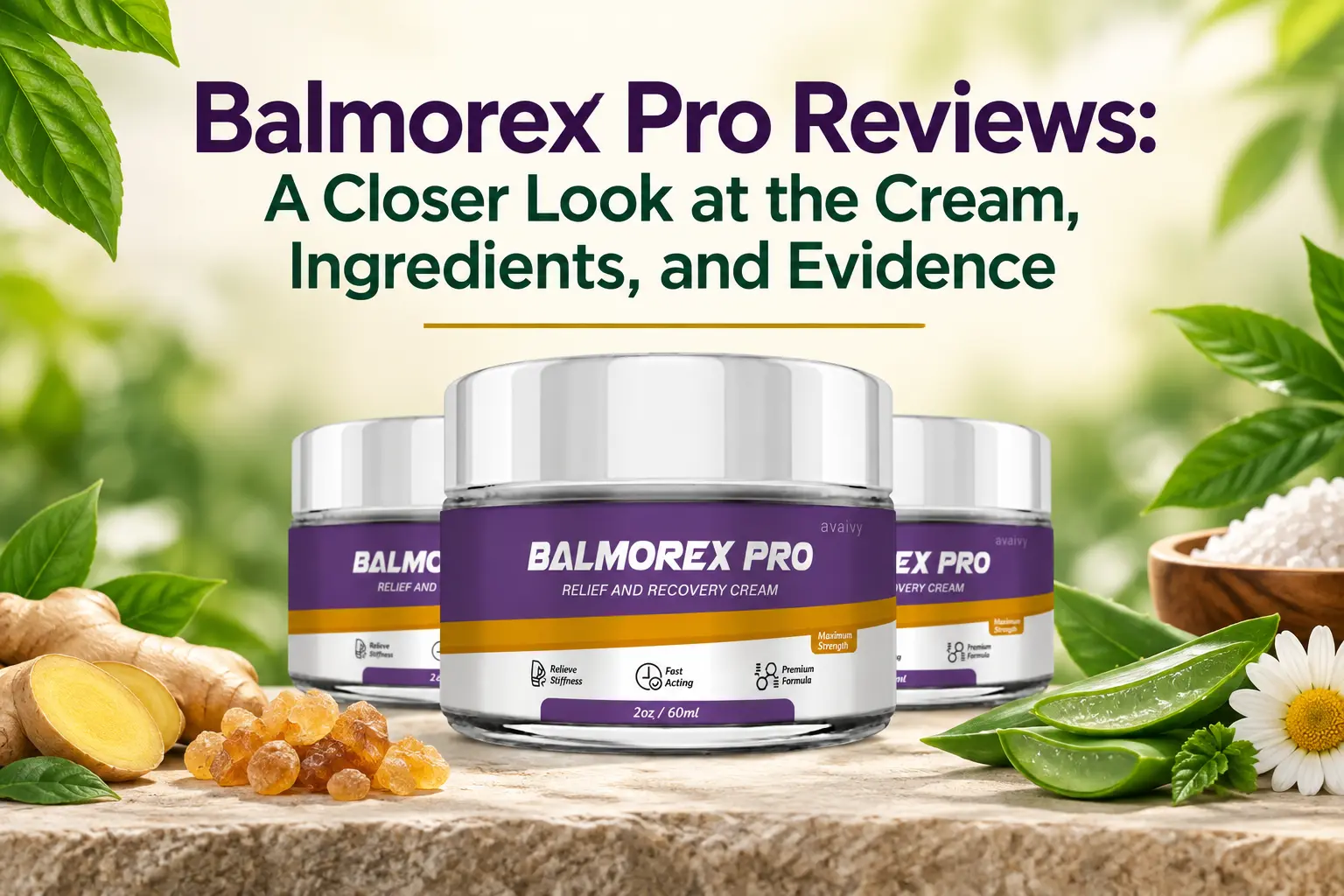
Balmorex Pro Reviews: A Closer Look at the Cream, Ingredients, and Evidence
If you have been looking for a cream to rub on an aching knee, sore shoulder, stiff back, or tired muscles, you have probably come across Balmorex Pro. The product is marketed as a natural topical formula with a long list of plant-based and other ingredients. That sounds appealing, but a long ingredient list does not necessarily tell you how well a product has been studied.
That is where Balmorex Pro Reviews become useful. Instead of simply repeating the promises made on sales pages, this review looks at what can actually be verified about the product, what the current label appears to contain, and how much independent research exists for the ingredients.
There is some legitimate research behind several ingredients associated with Balmorex Pro. Arnica, for example, has been tested in a randomized trial for hand osteoarthritis. Boswellia has also been studied, although much of that research involves oral products rather than creams. MSM has been investigated as well, but the results are not especially convincing.
The bigger question is whether those individual studies tell us that Balmorex Pro itself works. They do not necessarily do so. Here is what we found.
“Disclosure: Vitaore may earn a commission if you purchase a product through links on this page. This does not affect our editorial evaluation or the price you pay.”
What Is Balmorex Pro?
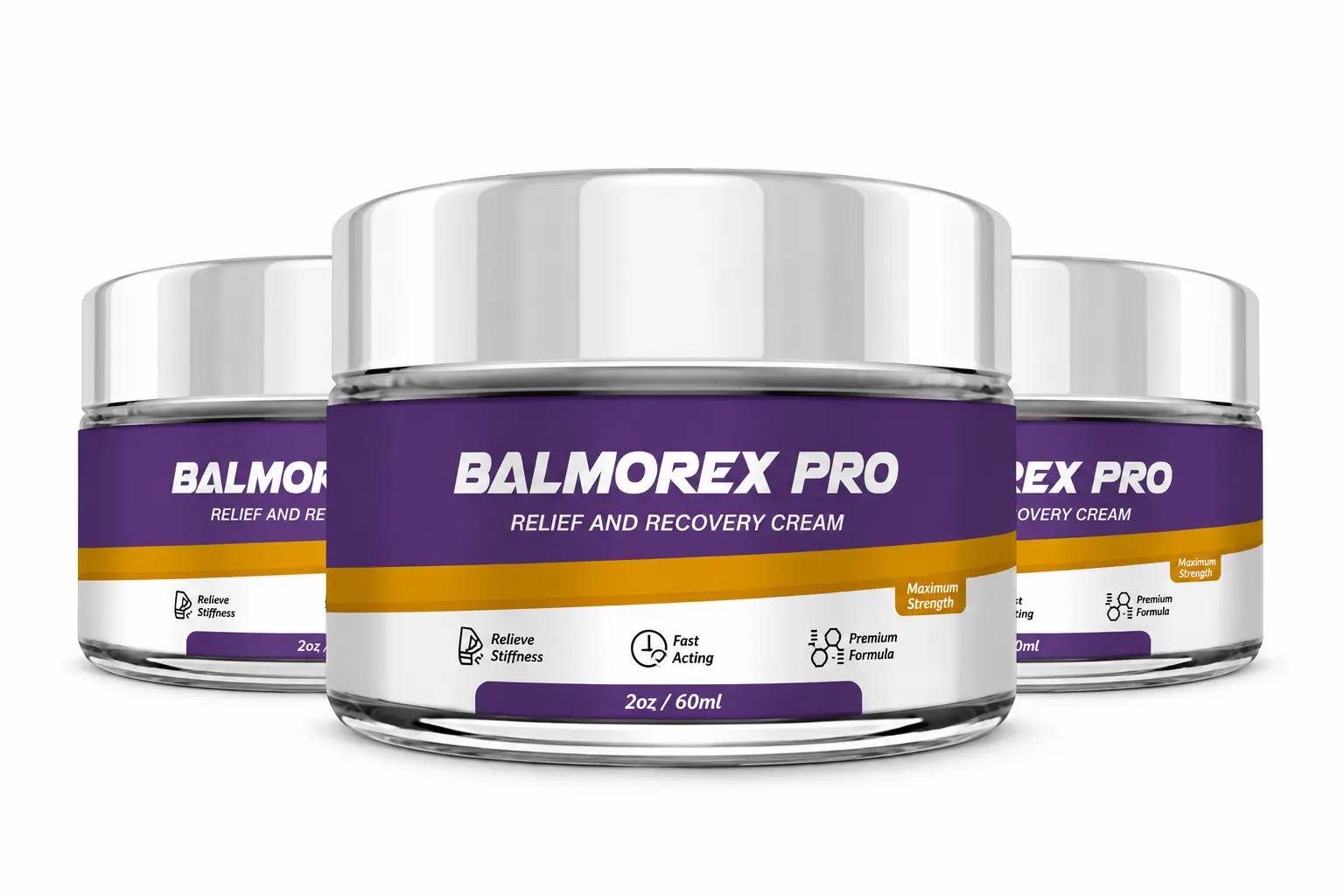
Balmorex Pro is a topical cream marketed for joint, muscle, back, and other forms of localized discomfort. Unlike an oral supplement, it is intended to be rubbed directly onto the skin in the area where the user wants relief.
The product’s marketing focuses heavily on its natural ingredient profile. Current promotional material describes it as a multi-ingredient formula containing MSM, arnica oil, ginger, hemp seed oil, Boswellia, aloe vera, Epsom salt, shea butter, and several other ingredients. One current product website describes the formula as containing 14 highlighted ingredients, while other Balmorex Pro marketing materials continue to call it a 27-ingredient formula.
That difference is worth mentioning because it is one of the first things we noticed while researching Balmorex reviews.
A separate review that examined a seller-hosted label in September 2026 reported 28 listed ingredients when the formulation ingredients were counted. That label included menthol, camphor, MSM, arnica oil, Boswellia serrata, ginger extract, aloe vera, bromelain, magnesium sulfate, niacin, GABA, hemp seed oil, reishi extract, and other components.
The safest approach is therefore to check the label on the jar you actually receive. Online product pages can change, and the public descriptions are not completely consistent.
What Is Actually in Balmorex Pro?
The current seller-hosted label reviewed in September 2026 lists the following ingredients:
| Ingredient | Listed on current label | Main reason it is interesting |
|---|---|---|
| MSM | Yes | Studied for joint discomfort |
| Arnica oil | Yes | Has topical osteoarthritis research |
| Aloe vera | Yes | Common skin-soothing ingredient |
| Bromelain | Yes | Enzyme with anti-inflammatory research |
| Magnesium sulfate | Yes | Commonly known as Epsom salt |
| Ginger root extract | Yes | Studied for pain and inflammation |
| Vitamin C derivative | Yes | Nutritional and antioxidant ingredient |
| Camphor | Yes | Traditional topical counterirritant |
| Menthol | Yes | Established topical cooling ingredient |
| GABA | Yes | Neuroactive compound |
| Hemp seed oil | Yes | Plant oil and skin-conditioning ingredient |
| Boswellia serrata | Yes | Studied for joint symptoms |
| Reishi extract | Yes | Mushroom extract |
| Shea butter | Yes | Moisturizing base ingredient |
| Other formulation ingredients | Yes | Used to create the cream |
The important detail is what this table does not tell us.
The label does not provide the concentration of each ingredient. That makes a major difference when comparing Balmorex Pro with published research. A clinical study might use a specific concentration of an ingredient, while the amount in a commercial cream may be much lower.
The independent ingredient review that examined the current label also reported that it could not identify public data showing how much of the main ingredients penetrates the skin from this particular formulation. It likewise did not identify a randomized clinical trial testing the complete Balmorex Pro formula.
That is not automatically a reason to reject the product. It is simply something buyers should know before interpreting claims such as “clinically proven.”
Balmorex Pro Ingredients: What Does the Research Say?
This is one of the most useful parts of a Balmorex Pro review.
A product can contain ingredients that have been studied extensively and still lack clinical evidence for the finished product. The route of administration matters too. Research involving an oral supplement does not automatically tell us what happens when the same substance is rubbed onto the skin.
MSM
MSM, or methylsulfonylmethane, is one of the main ingredients promoted in Balmorex Pro.
There is human research on MSM and osteoarthritis, but the evidence is not as strong as the product’s marketing language might suggest.
A meta-analysis published in Evidence-Based Complementary and Alternative Medicine examined controlled trials involving MSM and DMSO for osteoarthritis. Only three trials, involving 326 participants, met the researchers’ criteria. The pooled analysis did not find a statistically or clinically significant reduction in pain. The authors noted mixed findings and limitations in the available studies.
NCCIH similarly describes the evidence for MSM in osteoarthritis as limited.
There is another problem here. The human MSM studies that are commonly cited in discussions about joint health generally involve oral MSM, not the topical Balmorex Pro formulation.
So it would be too strong to say that MSM has been clinically proven to work in Balmorex Pro.
Arnica
Arnica is one of the more interesting ingredients because there is actual clinical research involving a topical preparation.
In a randomized, double blind study, 204 people with osteoarthritis of the hands received either a specific arnica gel or 5% ibuprofen gel for 21 days. The researchers found no significant difference between the two groups in pain or hand function. The study concluded that the particular arnica preparation tested was not inferior to the ibuprofen gel for the outcomes examined.
A Cochrane review of topical herbal therapies also found moderate evidence from that study that arnica gel produced similar results to ibuprofen gel in hand osteoarthritis.
This is useful evidence, but there is a catch.
The arnica preparation used in that trial was a specific formulation with a defined concentration. Balmorex Pro lists arnica oil, but the current label does not tell consumers how much arnica oil is present.
So the study tells us something about topical arnica, not about Balmorex Pro specifically.
Boswellia
Boswellia serrata, sometimes called Indian frankincense, has received considerable attention in joint health research.
NCCIH says several studies have found that orally taken Boswellia may help reduce pain and inflammation associated with osteoarthritis, although larger and better quality studies are still needed. For topical Boswellia, the situation is different. NCCIH says there is not enough evidence to determine whether topical Boswellia is effective for osteoarthritis or other conditions.
That distinction is easy to miss.
Someone reading a Balmorex Review might see that Boswellia has been studied for arthritis and assume that a cream containing Boswellia has been proven to provide the same benefit. The research does not support making that leap.
The formulation, concentration, route of administration, and absorption can all change the result.
Ginger
Ginger root extract is another ingredient used in Balmorex Pro.
There is some research into ginger and pain, including research involving osteoarthritis. There has also been research into topical herbal preparations containing ginger. However, the studies vary considerably in their preparations and designs.
NCCIH’s review of complementary approaches for chronic pain notes that some oral herbal products, including ginger and Boswellia, may have modest effects on osteoarthritis symptoms, but the overall evidence for herbal approaches remains limited.
Again, that does not establish that the amount of ginger in Balmorex Pro produces a particular result.
Aloe Vera
Aloe vera is familiar as a skin-soothing ingredient. In a topical cream, it may contribute to the feel and moisturizing characteristics of the formulation.
That is different from saying aloe vera has been shown to relieve deeper joint pain.
There is not enough evidence to use its presence in Balmorex Pro as proof of a meaningful pain-relieving effect.
Epsom Salt
The ingredient list identifies magnesium sulfate, commonly known as Epsom salt.
Epsom salt is widely used in baths for sore muscles, but traditional use and clinical evidence are not the same thing. The presence of magnesium sulfate in a topical cream does not demonstrate that enough magnesium enters the body or underlying tissues to produce a meaningful therapeutic effect.
Bromelain
Bromelain is an enzyme derived from pineapple.
It has been investigated for various inflammatory and musculoskeletal conditions, but research on bromelain does not establish what it contributes to the Balmorex Pro formulation.
The same issue applies to several of the other less prominent ingredients. A compound can have an interesting biological profile without having evidence that it produces a measurable benefit when included in this particular cream.
Menthol and Camphor
The current seller-hosted label also lists menthol and camphor.
These two ingredients deserve attention because they have a different role from ingredients such as Boswellia and MSM.
Menthol is commonly used in topical analgesic products because it creates a cooling sensation on the skin. Camphor has also been used in topical products that create cooling or warming sensations.
If a person applies a cream containing these ingredients and immediately feels cooling or warmth, that sensation is real. It should not, however, be confused with evidence that the product has repaired cartilage, corrected an underlying joint disorder, or reversed nerve damage.
The FDA has established an OTC monograph framework for certain external analgesic ingredients, including menthol and camphor, at specified concentrations and under specified conditions.
Because the Balmorex Pro label reviewed publicly does not state the concentrations of these ingredients, it is not possible to determine from the ingredient list alone how the finished product compares with a particular OTC topical analgesic.
How Is Balmorex Pro Supposed to Work?
The company’s explanation is built around the idea that several ingredients work together to address inflammation and discomfort.
Its marketing describes MSM as a central ingredient and attributes broad effects to the combination of MSM, Boswellia, arnica, ginger, aloe vera, and the other components. Some promotional pages go considerably further, describing the cream as addressing the “root cause” of pain and supporting tissue repair.
Those are company claims.
A more cautious interpretation is that the cream combines ingredients with different proposed mechanisms. Some may affect skin sensation. Others have been investigated for inflammatory pathways or musculoskeletal symptoms. Some mainly serve as moisturizing or formulation ingredients.
What has not been established is that all of those ingredients work together in Balmorex Pro in a way that produces a clinically meaningful outcome.
That would require testing the finished formula.
What Does the Evidence Actually Tell Us?
After going through the ingredient research, the answer is more nuanced than either “it works” or “it does nothing.”
There is research behind some of the ingredients.
Topical arnica has been studied in people with hand osteoarthritis. Boswellia has been studied extensively enough to attract multiple reviews, although the stronger evidence is mostly from oral preparations. MSM has also been tested, but its overall evidence for osteoarthritis pain is weak.
What we do not have is the same level of evidence for the finished Balmorex Pro product.
I did not find a peer-reviewed randomized controlled trial testing the complete current Balmorex Pro formula in people with joint or muscle pain.
That distinction should stay at the center of any honest Balmorex Pro Review.
It is possible for a product to provide temporary comfort without having a large clinical trial behind it. Many people use topical products based on personal experience. But personal experience and clinical evidence answer different questions.
A trial asks whether the product performs better than a comparison under controlled conditions.
A customer review tells you what happened to one person.
Both can be interesting. They should not be treated as interchangeable.
What Do Balmorex Reviews and Customer Reports Say?
There are plenty of positive statements about Balmorex Pro online. Some promotional pages describe users reporting improved mobility, less discomfort, easier movement, and quick absorption.
The problem is not that personal experiences are impossible. The problem is that many of the published reviews appear alongside sales material, making it difficult to independently verify the people, circumstances, and outcomes behind every testimonial.
The two reference articles supplied for this review also rely heavily on product claims and reported customer experiences. The EIN Presswire article presents the product as a fast-acting natural relief cream, while the Access Newswire piece discusses customer feedback and product positioning. Both should be understood as promotional or marketing-oriented sources rather than independent clinical research.
That does not make every statement in them false.
It simply means we should not use them as proof that Balmorex Pro is clinically effective.
When reading Balmorex reviews, pay attention to whether the reviewer is:
- describing their own experience
- repeating a manufacturer’s claim
- citing an actual study
- comparing the product with another treatment
- providing verifiable information about the formula
Those are very different kinds of evidence.
Balmorex Pro Benefits and Limitations
There are some practical reasons someone might be interested in a topical product like this.
The cream can be applied directly to a specific area. Some people prefer topical products because they do not want to take another oral supplement. The formula also includes ingredients that have at least some history of use in topical or joint-health products.
But there are equally important limitations.
| What may appeal to buyers | What deserves caution |
|---|---|
| Direct application to a particular area | No finished-product clinical trial identified |
| Several familiar botanical ingredients | Concentrations are not publicly disclosed |
| Includes menthol and camphor on the current label | Exact strength of those ingredients is unclear |
| Arnica has topical human research | The studied arnica formulation differs from Balmorex Pro |
| Boswellia has joint-health research | Most useful evidence involves oral preparations |
| 60-day guarantee is advertised | Current terms should be checked before purchase |
| Natural ingredient positioning | Natural does not automatically mean effective or risk-free |
Balmorex Pro Side Effects and Safety
A topical cream may seem less complicated than a pill, but skin reactions can still happen.
Balmorex Pro contains several botanical ingredients along with menthol, camphor, and other formulation components. Anyone with sensitive skin or known allergies should read the complete label before using it.
Potential problems with topical products can include:
- Redness
- Itching
- Burning or irritation
- Contact dermatitis
- Allergic reactions
- Increased sensitivity in people with certain allergies
The product should not be applied to the eyes or other sensitive areas, and broken or damaged skin deserves particular caution.
Arnica is also worth mentioning because some people can react to plants in the Asteraceae family.
For anyone taking prescription medication, especially medication that can affect bleeding, it is sensible to discuss unfamiliar herbal products with a healthcare professional rather than assuming that topical use makes interactions impossible.
NCCIH notes more generally that complementary and herbal products can have side effects and may interact with medicines.
If you develop a significant rash, swelling, breathing difficulty, or another serious reaction after using a topical product, stop using it and seek appropriate medical care.
Is Balmorex Pro FDA Approved?
This is one claim consumers should look at carefully.
Some Balmorex Pro websites display statements such as “FDA Approved” while elsewhere explaining that the product is made in an FDA-registered facility.
Those statements are not equivalent.
An FDA-registered manufacturing facility is not the same thing as FDA approval of the finished product.
The FDA has specific regulatory pathways and requirements for different categories of products. Its OTC external analgesic monograph, for example, sets conditions for certain active ingredients used in topical pain-relief products.
The Balmorex Pro sales material itself also contains the standard type of disclaimer stating that its claims have not been evaluated by the FDA.
For that reason, I would not describe Balmorex Pro as an “FDA-approved pain cream.”
That wording would go beyond what the available evidence supports.
How to Use Balmorex Pro
Directions found online are not completely consistent.
One promotional source describes applying the cream two to four times per day, while other current sales material gives different instructions.
That is a good example of why an online Balmorex Review should not replace the product label.
If you purchase Balmorex Pro, follow the instructions printed on the current jar or packaging. Do not increase the amount simply because you want quicker results.
Apply only to the areas specified by the label, wash your hands after use if directed, and avoid contact with the eyes or broken skin.
Balmorex Pro Price and Buying Information
One current sales page advertises a promotional price of $49 for a jar and a 60-day money-back guarantee.
The promotional material supplied for this review has also described multi-jar packages and a 60-day guarantee. However, because online offers can change, buyers should check the final checkout page for the exact price, shipping charges, package size, and refund conditions before placing an order.

Is Balmorex Pro Legit?
There are a few different questions hidden inside the word “legit.”
Is there a product being sold under the Balmorex Pro name? Yes.
Is there a published ingredient list? Yes, although the number of ingredients described online has varied between sources, and concentrations are not publicly stated on the label reviewed here.
Are some of the ingredients backed by research? Yes.
Does that research prove that the complete Balmorex Pro formula works? No.
Is there a peer-reviewed clinical trial of the finished formula that I could identify? No.
Is there a money-back guarantee advertised? Yes.
Are all online testimonials independent clinical evidence? No.
That is a more useful way of evaluating the product than attaching a simple “legit” or “scam” label.
Who Might Be Interested in Balmorex Pro?
Someone looking for a topical product for temporary relief from everyday muscle or joint discomfort may reasonably come across Balmorex Pro during their search.
It may particularly appeal to someone who:
- Prefers a cream over an oral product
- Wants to apply something directly to a sore area
- Is interested in botanical ingredients
- Wants to avoid taking another pill
- Is looking for a product for occasional muscle or joint discomfort
That does not mean it is suitable for every type of pain.
A cream should not be used as a substitute for finding the cause of persistent pain.
For example, recurring back pain, unexplained swelling, significant weakness, numbness, a serious injury, or rapidly worsening symptoms may require medical assessment.
Who Should Be More Careful?
Speak with a healthcare professional before trying a product like this if you:
- Are pregnant or breastfeeding
- Have a history of significant skin allergies
- Take prescription medicines that could interact with herbal ingredients
- Have unexplained chronic pain
- Have recently suffered a significant injury
- Have swelling, redness, warmth, or signs of infection
- Have persistent numbness or weakness
- Have been diagnosed with a serious joint, nerve, or inflammatory condition
A topical cream can sometimes provide temporary comfort while the underlying problem remains.
That distinction is particularly important when pain keeps coming back.
Balmorex Pro vs Conventional Topical Pain Relief
It is tempting to compare Balmorex Pro with every pain cream on the market, but they are not necessarily equivalent products.
Balmorex Pro is built around a mixture of botanical ingredients and other compounds. Conventional topical analgesics may instead use a clearly identified active drug ingredient at a stated concentration.
That difference affects how easy it is to interpret the evidence.
| Feature | Balmorex Pro | Conventional topical analgesic |
|---|---|---|
| Format | Topical cream | Usually gel, cream, patch, or similar |
| Formula | Multi-ingredient | Often centered around one or a few defined actives |
| Ingredient concentrations | Not publicly disclosed on reviewed label | Active ingredients generally identified with concentrations |
| Product-specific evidence | Not identified in this review | Varies by specific product |
| Research | Mostly ingredient-level | Often focused on the active ingredient and indication |
| Consumer experience | Can vary | Can vary |
| Regulatory status | Should be checked for the specific product | Depends on active ingredient and product |
This does not mean a conventional topical product is automatically appropriate for everyone.
It simply means the evidence behind a product needs to be evaluated according to what is actually being sold.
Balmorex Pro Review: Our Take
After going through the product information and the available research, I would describe Balmorex Pro as an interesting but incompletely studied topical formula.
There is more substance behind some of the ingredients than there is behind others.
Arnica has actual topical clinical research. Boswellia has a reasonable amount of research for joint symptoms, although much of it involves oral supplementation. MSM has been studied too, but the overall evidence for osteoarthritis pain has not been especially strong.
The bigger issue is the finished formula.
We know considerably less about how Balmorex Pro itself performs than the marketing language might suggest. The current public label does not disclose the concentration of its major ingredients, and I could not identify a peer-reviewed randomized trial testing the complete formula.
That leaves consumers with an important distinction to make.
The ingredients have research. Balmorex Pro itself has much less direct evidence.
Someone who wants to try a topical botanical product may still find the formulation interesting. But it would be a mistake to buy it on the assumption that phrases such as “clinically proven,” “root-cause relief,” or “FDA approved” mean the finished cream has been established as an effective medical treatment.
Read the current label. Check the final price and refund terms. Consider your own medical situation. And if pain is persistent or significant, find out what is causing it rather than relying on a topical product alone.
That is the more useful conclusion to take from Balmorex Pro Reviews.
Frequently Asked Questions
What is Balmorex Pro?
Balmorex Pro is a topical cream marketed for joint, muscle, back, and localized discomfort. Public product information describes a multi-ingredient formula containing ingredients such as MSM, arnica, ginger, Boswellia, aloe vera, and other compounds.
Does Balmorex Pro work?
There is research involving some of its ingredients, but that is not the same as having a clinical trial of Balmorex Pro itself. A peer-reviewed randomized controlled trial of the complete current formula was not identified in this review.
What are the main Balmorex Pro ingredients?
The current seller-hosted label lists MSM, arnica oil, aloe vera, bromelain, magnesium sulfate, ginger extract, menthol, camphor, GABA, hemp seed oil, Boswellia serrata, reishi extract, shea butter, and other formulation ingredients.
Is Balmorex Pro FDA approved?
The product is marketed alongside statements about an FDA-registered manufacturing facility. That should not be interpreted as FDA approval of Balmorex Pro itself. The available product disclaimer also states that its claims have not been evaluated by the FDA.
Does Balmorex Pro contain MSM?
Yes. MSM, or methylsulfonylmethane, appears on the current seller-hosted label. Human research on MSM exists, but much of it involves oral use rather than the topical route used by Balmorex Pro.
Does Balmorex Pro contain Boswellia?
Yes. Boswellia serrata extract is listed on the current label. NCCIH says oral Boswellia has shown some potential for osteoarthritis symptoms, but there is not enough evidence to establish topical Boswellia as an effective treatment.
Are Balmorex reviews reliable?
They can be useful for learning about individual experiences, packaging, texture, or purchasing issues. However, customer testimonials are not a replacement for controlled clinical research, especially when the reviews appear on promotional websites.
How much does Balmorex Pro cost?
Current promotional pricing varies. One sales page reviewed in September 2026 listed a promotional price of $49 per jar and advertised a 60-day money-back guarantee. Prices and offers can change, so check the current checkout page before ordering.
Does Balmorex Pro have a money-back guarantee?
Current promotional material advertises a 60-day money-back guarantee. Buyers should read the current refund conditions before purchasing because return and shipping terms can change.
References and Sources
- EIN Presswire product announcement
- Access Newswire product report
- PubMed, topical arnica and hand osteoarthritis
- PubMed, MSM and DMSO meta-analysis
- NCCIH, Boswellia
- NCCIH, Osteoarthritis
- NCCIH, Complementary approaches for chronic pain
Medical Disclaimer
This article is for educational purposes only and is not a substitute for medical advice, diagnosis, or treatment. If you have persistent, severe, unexplained, or worsening pain, or symptoms such as significant swelling, weakness, numbness, fever, or loss of function, consult a qualified healthcare professional.