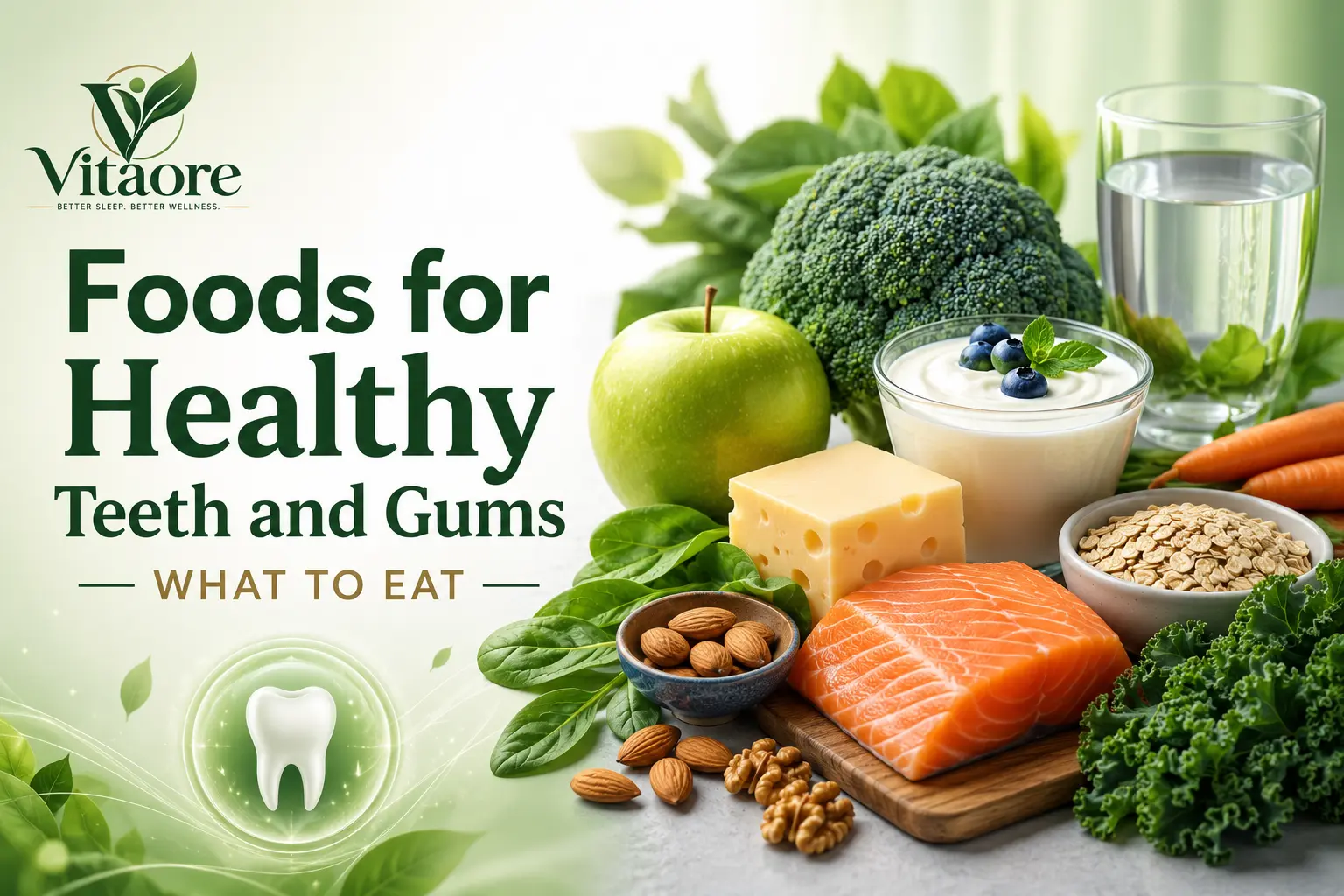
Foods for Healthy Teeth and Gums: What to Eat
Your diet can play an important supporting role in keeping your teeth and gums healthy. The foods for healthy teeth and gums include nutrient-rich choices such as dairy products, leafy greens, vegetables, nuts, fish, whole grains, and water. These foods can provide nutrients involved in maintaining teeth and oral tissues, while lower-sugar choices can reduce frequent exposure to the sugars that contribute to tooth decay. However, diet is only one part of oral care. Brushing twice daily with fluoride toothpaste, cleaning between your teeth, and getting regular dental care remain essential.
How Does Food Affect Your Teeth and Gums?
Food affects your mouth in several ways.
When you eat foods containing sugars and starches, bacteria in dental plaque can use these carbohydrates and produce acids. Repeated acid exposure can remove minerals from tooth enamel and contribute to tooth decay. The frequency of these exposures matters because repeated eating and drinking can give teeth less time to recover between acid attacks.
Diet also provides nutrients your body needs to maintain teeth, bones and oral tissues. Calcium, phosphorus, vitamin D, vitamin C and protein are among the nutrients that can be obtained through a varied diet.
Saliva is another important part of the equation. It helps wash food particles away and contains minerals that help protect teeth. Staying hydrated can support normal saliva production, particularly for people who experience dry mouth.
So, the goal is not to find one “perfect” food. A balanced dietary pattern, combined with good oral hygiene, is much more useful.
10 Best Foods for Healthy Teeth and Gums
1. Plain Yogurt
Plain yogurt can be a useful addition to an oral-health-supportive diet because it provides protein and calcium. Choosing unsweetened yogurt also avoids the added sugars found in wide-flavored varieties.
Look at the nutrition label when choosing yogurt. Some products marketed as healthy can contain considerable amounts of added sugar.
Yogurt is a nutritious food, but it should not be viewed as a treatment for cavities or gum problems.
2. Cheese
Cheese provides calcium and protein and can fit easily into a balanced diet.
Dairy foods are commonly recommended as sources of calcium and other nutrients relevant to dental health.
For an everyday option, consider pairing a small amount of cheese with vegetables or a meal rather than choosing highly processed cheese products with added ingredients.
3. Leafy Greens
Spinach, kale, and collard greens are nutrient-dense foods that can contribute calcium, vitamin C, folate, and other nutrients to your diet.
Leafy greens are particularly useful because they provide several nutrients without adding much sugar. Penn Dental Medicine includes dark leafy vegetables among foods that can support nutritional needs related to teeth and gums.
They can be added to salads, omelets, soups, sandwiches, or smoothies.
4. Salmon and Other Fatty Fish
Salmon and other fatty fish provide protein and vitamin D, along with other nutrients.
Vitamin D plays an important role in calcium and phosphate metabolism, which are relevant to maintaining bones and teeth. Penn Dental Medicine lists salmon and other vitamin D-containing foods among useful dietary choices for oral health.
Other options include sardines, trout and mackerel.
Eating fish does not treat gum disease, but it can be part of a nutritious overall diet.
5. Almonds and Other Nuts
Nuts such as almonds can provide protein, minerals and relatively little sugar compared with many processed snack foods.
Almonds are also a source of calcium.
Choose unsalted or lightly salted varieties when possible. If you have dental problems that make hard foods uncomfortable, choose a texture that is appropriate for you rather than forcing yourself to eat whole nuts.
Nuts do not scrape away plaque effectively enough to replace brushing or cleaning between your teeth.
6. Broccoli and Other Crunchy Vegetables
Broccoli, carrots, celery and similar vegetables can contribute fiber, vitamins and minerals to your diet.
Their texture also requires chewing, which can stimulate saliva flow. Saliva helps wash food particles away and provides minerals that contribute to tooth protection.
However, crunchy vegetables are not a natural toothbrush. They cannot remove plaque as effectively as proper brushing and interdental cleaning.
7. Apples
Whole apples provide fiber and water and are generally a better everyday choice than many sugary processed snacks.
Their crunchy texture also means you chew them more than softer foods, which can stimulate saliva.
However, apples contain naturally occurring sugars and are mildly acidic. Eating an apple does not mean your teeth are being “cleaned.” Continue your normal oral hygiene routine after eating.
8. Carrots and Celery
Raw carrots and celery are convenient crunchy vegetables that provide nutrients while containing little sugar.
Chewing can stimulate saliva production, and saliva plays an important protective role in the mouth.
These foods can make good snacks, but they should complement, not replace, brushing and cleaning between your teeth.
9. Whole Grains
Oatmeal, brown rice, quinoa and whole-wheat foods can provide fiber, B vitamins and other nutrients.
Penn Dental Medicine recommends whole grains as part of a generally healthy dietary pattern for oral health.
Whole grains can also be useful for building balanced meals alongside vegetables and protein.
Remember that some carbohydrate-containing foods can still contribute to acid production by oral bacteria, so overall dietary pattern and oral hygiene remain important.
10. Water
Water deserves special attention because it does more than simply provide hydration.
Drinking water can help wash food particles from the mouth and support normal saliva function. It is also a naturally sugar-free alternative to soda, sweetened tea, sports drinks, and other sugary beverages.
If your community water supply is fluoridated, drinking that water can also provide fluoride exposure. Fluoride helps strengthen enamel and prevent tooth decay. Fluoride levels vary by water source, so check with your local water utility if you want to know what is in your drinking water.
Best Drinks for Healthy Teeth
Water
For most people, water is the simplest everyday beverage choice for oral health. It contains no added sugar and can help rinse the mouth after eating.
Milk
Milk provides calcium and other nutrients and can be part of a balanced diet. Plain milk is generally a different oral-health choice from flavored milk beverages containing added sugar.
Unsweetened Tea
Green and black tea can be reasonable low-sugar beverage choices when consumed without added sugar.
The Oral Health Foundation identifies tea as a beverage that can fit into an oral-health-supportive diet and notes that tea naturally contains fluoride.
That does not mean tea prevents cavities on its own.
What About Coffee?
Plain coffee without added sugar is different from a large coffee beverage containing syrups, sweetened creamers, or other sugary ingredients.
If you drink coffee, pay attention to what you add and how long you spend sipping it. Constantly sipping a sweetened beverage throughout the day can increase repeated exposure to sugars and acids.
Coffee can also stain teeth, although staining is different from tooth decay.
Foods and Drinks to Limit for Better Oral Health
You do not need to create a completely forbidden-food list. Instead, focus on how often you consume foods and drinks that can increase oral-health risks.
Sugary Drinks
Examples include:
- Soda
- Sweet tea
- Energy drinks
- Sports drinks
- Sweetened coffee beverages
Sugars are an important factor in the development of dental caries. Oral bacteria can metabolize sugars and produce acids that contribute to enamel mineral loss.
Candy and Added Sugars
Candy, cookies, cakes, and other foods high in added sugar are best treated as occasional foods rather than foods eaten repeatedly throughout the day.
Sticky foods may also remain in contact with teeth for longer periods.
Frequent Snacking
A small amount of sugar eaten occasionally is different from repeatedly eating sugary foods or sipping sweetened drinks throughout the day.
Frequent exposure means repeated opportunities for acids to affect tooth enamel.
Acidic Drinks
Soda, energy drinks, and some fruit beverages can be acidic. Frequent exposure to acidic foods and beverages is associated with an increased risk of erosive tooth wear.
This is different from dental caries. Caries involves a complex, biofilm-mediated disease process in which dietary sugars are an important factor, while erosive tooth wear involves chemical loss of tooth tissue from acids.
Is Sugar the Only Food-Related Concern for Your Teeth?
No.
Sugar is an important consideration, but oral health is influenced by several factors.
Other considerations include:
- Frequency of eating and drinking
- Acidic foods and beverages
- Overall diet quality
- Hydration
- Nutritional adequacy
- Oral hygiene
- Tobacco use
- Saliva production
For example, drinking a sugary beverage slowly over several hours creates a different exposure pattern from drinking it relatively quickly with a meal.
The ADA describes the relationship between diet and oral health as complex and notes that both sugar consumption and frequent acidic food and beverage consumption can influence oral-health risks.
Does When You Eat Matter for Your Teeth?
Yes, frequency can matter.
Every time you consume sugars or certain starches, oral bacteria can produce acids. Saliva and fluoride then help counter the effects and restore minerals to the enamel. Repeated exposure throughout the day can interfere with this natural recovery process.
For example, instead of slowly sipping a sugary coffee for several hours, have it within a reasonable period and choose water afterward.
Instead of constantly snacking on candy, keep sugary foods occasional and focus on balanced meals and snacks.
This does not mean you need to follow a rigid eating schedule. The practical goal is to avoid constantly exposing your teeth to sugary or acidic foods and drinks.
What Nutrients Are Important for Healthy Teeth and Gums?
A varied diet can provide several nutrients that contribute to normal tooth, bone, and tissue health.
| Nutrient | Why It Matters | Food Sources |
|---|---|---|
| Calcium | Helps form and maintain teeth and bones | Dairy, leafy greens, fortified foods |
| Vitamin D | Helps regulate calcium and phosphate metabolism | Fatty fish, fortified foods, eggs |
| Vitamin C | Supports normal connective tissue and gum health | Citrus, berries, broccoli, peppers |
| Phosphorus | Important for teeth and bones | Fish, meat, dairy, beans |
| B Vitamins | Support normal tissues and overall nutrition | Whole grains, legumes, meat, eggs |
| Protein | Provides building blocks for body tissues | Fish, eggs, dairy, beans, poultry |
Getting these nutrients from a balanced diet is generally preferable to taking supplements without a specific reason.
If you have a diagnosed nutritional deficiency or a medical condition affecting nutrient absorption, supplementation may sometimes be appropriate, but that decision is best made with a qualified healthcare professional.
Can Foods Strengthen Tooth Enamel?
Food provides nutrients involved in maintaining teeth, but it is misleading to say that a particular food can simply “rebuild” damaged enamel.
Tooth enamel is involved in a constant process of mineral loss and mineral replacement. Saliva provides calcium and phosphate, while fluoride helps strengthen enamel and can help stop or reverse early tooth decay.
Calcium, phosphorus, and vitamin D are important nutrients, but eating a calcium-rich food does not directly repair an established cavity.
If a cavity has formed, it requires evaluation by a dentist.
Can Food Improve Gum Health?
A nutritious diet can support the tissues throughout your body, including your gums.
Foods containing vitamin C, protein, vitamin D and other nutrients can contribute to overall nutritional adequacy. Fruits, vegetables, fish, dairy foods, whole grains and legumes can all have a place in a balanced diet.
However, food is not a treatment for gum disease.
Plaque buildup is a major factor in gum disease, which is why brushing and cleaning between your teeth remain essential.
If your gums regularly bleed, swell, or become painful, speak with a dentist rather than trying to solve the problem through diet alone.
A Simple One-Day Meal Plan for Healthy Teeth and Gums
Here is one example of how oral-health-supportive foods can fit into a normal day.
Breakfast
- Plain Greek yogurt
- Berries
- Oatmeal or another whole grain
- Water
Lunch
- Grilled salmon or another lean protein
- Leafy green salad
- Broccoli
- Water
Snack
- Whole apple
- Small portion of unsalted nuts
- Water
Dinner
- Lean protein
- Roasted vegetables
- Whole grain
- Water
This is simply an example, not a medically prescribed diet. Individual nutritional needs vary depending on age, health, activity level, dietary preferences, and other factors.
Do You Need Supplements for Healthy Teeth and Gums?
Not necessarily.
A balanced diet should be the foundation of nutrition. Supplements may be appropriate for some people when a deficiency or specific nutritional need has been identified, but taking more of a nutrient does not automatically produce better oral health.
The same principle applies to oral-health supplements. Products marketed for oral microbiome support can contain different ingredients and formulations, and evidence can vary substantially between products.
Supplements should not replace fluoride toothpaste, brushing, cleaning between your teeth, or professional dental care.
If you’re also researching supplements marketed for oral microbiome and oral-health support, our DentaBiome Reviews guide examines the product’s ingredients, proposed benefits, safety considerations, pricing, customer experiences and available evidence.
Foods for Healthy Teeth and Gums: What to Eat Every Day
A simple approach is to focus on consistent habits rather than searching for a single “superfood.”
- Choose water most often.
- Include vegetables regularly.
- Eat nutrient-rich protein sources.
- Include calcium-rich foods.
- Choose whole fruits rather than frequently consuming sugary snacks.
- Limit sugary drinks.
- Limit frequent snacking on sugary foods.
- Choose unsweetened dairy when appropriate.
- Include whole grains and other nutrient-rich carbohydrates.
- Continue brushing with fluoride toothpaste and cleaning between your teeth.
These habits can support oral health, but they cannot guarantee that you will never develop a dental problem.
When Should You See a Dentist?
Diet cannot diagnose or treat dental problems.
Arrange a dental evaluation if you experience:
- Persistent gum bleeding
- Swollen or painful gums
- Tooth pain
- Loose teeth
- Persistent bad breath
- Significant tooth sensitivity
- Visible cavities
- Facial or mouth swelling
- Pus or suspected infection
- Mouth sores that do not heal
Plaque that remains on teeth can contribute to gum disease, and hardened plaque, known as tartar or calculus, requires professional removal.
Dietary changes and supplements should not delay appropriate dental care.
The Bottom Line
The best foods for healthy teeth and gums are not one specific group of “dental superfoods.” A balanced diet that includes vegetables, leafy greens, dairy or suitable calcium-rich alternatives, fish, nuts, whole grains, whole fruits and plenty of water can provide important nutrients while helping you limit added sugar. Frequency matters too, so try to avoid constantly sipping sugary or acidic drinks. Most importantly, food complements rather than replaces brushing with fluoride toothpaste, cleaning between your teeth and regular dental care.
Medical Disclaimer
This article is for general educational purposes only and does not replace individualized medical advice, diagnosis or treatment. If you have persistent gum bleeding, dental pain, swelling, suspected infection, significant sensitivity, or other ongoing oral-health concerns, speak with a qualified dentist or healthcare professional.