What Is the Oral Microbiome? A Simple Guide to Mouth Bacteria
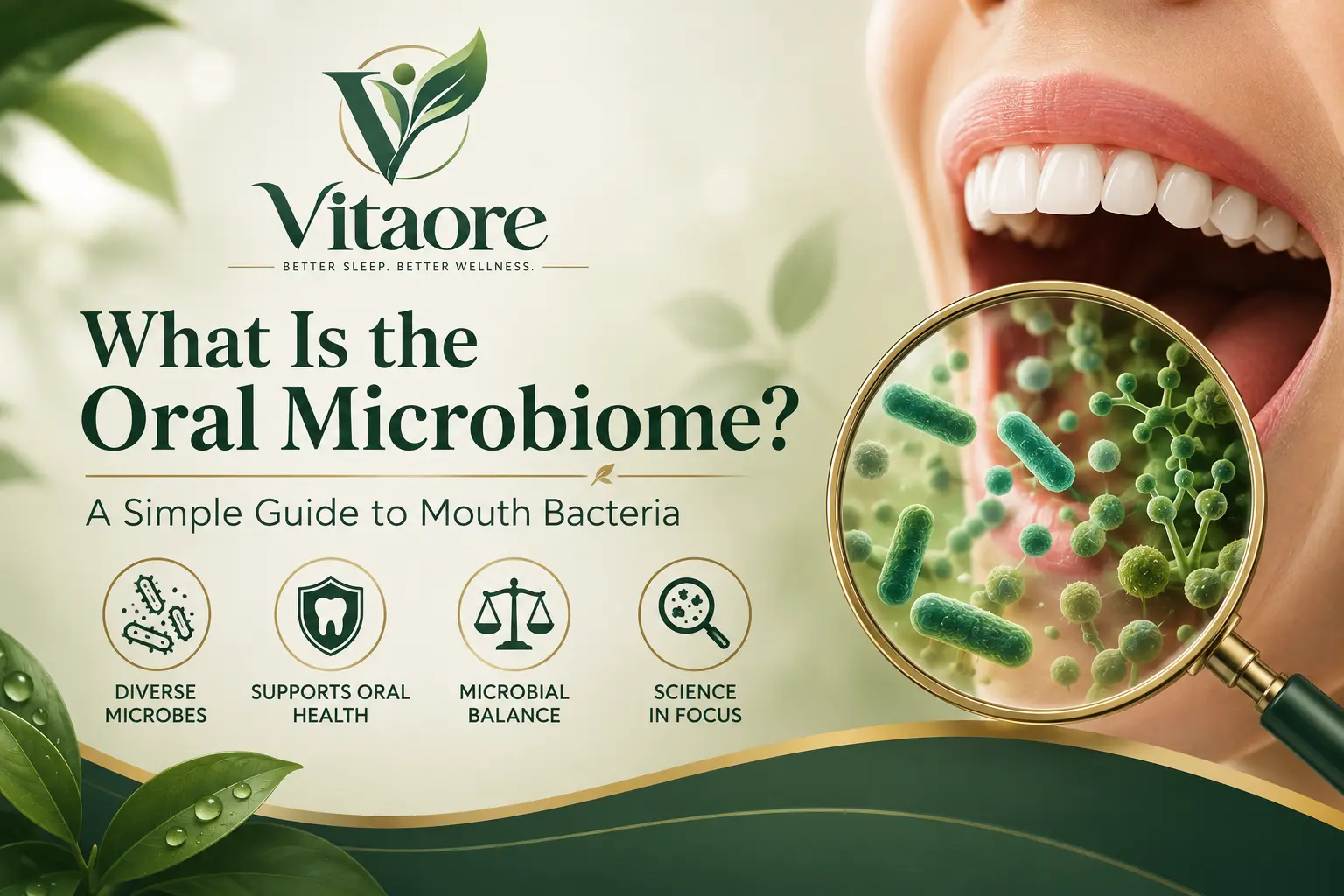
Your mouth is home to billions of microorganisms, and that is completely normal. So, what is the oral microbiome? It is the community of bacteria, fungi, viruses, and other microorganisms that live throughout your mouth. These microbes occupy different areas, including the tongue, teeth, gums, saliva, and inner cheeks. Some can support a healthy oral environment, while changes in microbial communities can contribute to problems such as tooth decay and gum disease. The goal is not to eliminate mouth bacteria, but to maintain an oral environment that supports healthy teeth and gums.
What Is the Oral Microbiome?
The term oral microbiome refers to the community of microorganisms living in and around the mouth, along with the genetic material and interactions associated with that community.
Bacteria make up a major part of this ecosystem, but they are not the only microorganisms present. Fungi, viruses, and other microscopic organisms also live in the oral cavity. Researchers have identified hundreds of microbial species associated with the human mouth, although scientists are still learning about many of them.
The oral microbiome is different from the gut microbiome because the mouth has its own unique environments and conditions. Food, saliva, oxygen levels, tooth surfaces, the immune system, and oral hygiene can all influence which microorganisms thrive in particular areas.
Importantly, having bacteria in your mouth does not mean you have an infection. Even people with good oral hygiene normally have a thriving oral microbiome.
What Microorganisms Live in Your Mouth?
The oral microbiome is a diverse ecosystem rather than a collection of bacteria alone.
Bacteria
Bacteria are among the most extensively studied members of the oral microbiome. Some bacteria can coexist with healthy oral tissues, while others can contribute to processes involved in tooth decay or gum disease under certain conditions.
For example, Streptococcus mutans is associated with tooth decay because certain bacteria can use sugars to produce acids that attack tooth enamel. However, it would be misleading to describe every oral bacterium as either “good” or “bad.” Microbial interactions are much more complicated than that.
Fungi
Fungi are also natural members of the oral microbial community. Their presence does not automatically indicate disease. Problems can occur when particular microorganisms grow excessively or when changes in the oral environment affect the normal balance between microbes and the host.
Viruses
Viruses can also be found within the oral microbial environment. Some interact with bacteria and other microorganisms, making the oral microbiome a complex ecosystem rather than a simple collection of independent organisms.
Other Microorganisms
Researchers continue to identify and study microorganisms that are difficult to grow or characterize in traditional laboratory settings. This means our understanding of the oral microbiome is still developing.
Where Does the Oral Microbiome Live?
The mouth contains several distinct microbial habitats.
These include:
- Tongue
- Teeth
- Gums
- Gumline
- Saliva
- Inner cheeks
- Roof of the mouth
- Areas between teeth
The microbial communities found in one location may differ from those found somewhere else. For example, microorganisms living on the tongue can have different environmental conditions from those living in dental plaque or around the gumline.
NIDCR research has shown that microbial communities on the cheek lining, roof of the mouth, and areas above and below the gumline can differ considerably. Researchers have also found highly organized microbial structures within dental plaque and on the tongue.
Why Is the Oral Microbiome Important?
The oral microbiome is important because microorganisms interact with one another, the tissues in your mouth, saliva, food, and your immune system.
A healthy microbial community can coexist with the body’s tissues without causing disease. Some microorganisms may also compete with potentially harmful organisms for space and nutrients.
Problems can develop when the microbial environment changes in ways that favor disease-associated processes. Researchers call this type of disruption dysbiosis.
Dental plaque is one example of an oral microbial community. It is a biofilm that forms on tooth surfaces. If plaque is not adequately removed, it can contribute to tooth decay and inflammation of the gums.
The important point is that oral health is not about having no bacteria. It is about maintaining a healthy relationship between the microorganisms, your oral tissues, saliva, diet, and daily habits.
What Is a Healthy Oral Microbiome?
There is no single list of microorganisms that defines a “perfect” oral microbiome.
Instead, a healthy oral microbiome can be thought of as a microbial ecosystem that exists alongside healthy teeth, gums, and other oral tissues.
Several factors can be relevant, including:
- A diverse microbial community
- Stable microbial interactions
- Healthy gums
- Healthy teeth
- Adequate saliva
- Effective plaque control
- Good oral hygiene
- A balanced diet
The specific microorganisms and their proportions can vary naturally from person to person. Researchers are still studying which microbial combinations are associated with health and which changes are associated with disease.
What Is Oral Microbiome Dysbiosis?
Dysbiosis generally refers to a disruption or imbalance in a microbial community.
In oral-health research, the term can describe changes in microbial communities that are associated with unhealthy conditions. It does not mean there is one specific microorganism responsible for every oral-health problem.
Several factors may influence the oral microbial environment, including:
- Poor oral hygiene
- Frequent exposure to sugary foods and drinks
- Tobacco use
- Dry mouth
- Certain medications
- Diet
- Illness
- Immune-system changes
- Existing oral disease
These factors do not automatically cause dysbiosis in every person. The oral microbiome is influenced by multiple interacting factors, which is one reason researchers continue to study it.
How Does the Oral Microbiome Affect Teeth and Gums?
The relationship between oral bacteria and dental health is particularly important.
Plaque
Plaque is a sticky microbial biofilm that develops on teeth. If it remains on the teeth, it can contribute to tooth decay and gum inflammation.
Tooth Decay
Certain bacteria can use sugars and starches from food and drinks to produce acids. Repeated acid exposure can weaken tooth enamel and contribute to cavities over time.
Gum Health
Changes in microbial communities within dental plaque can interact with the body’s immune response and contribute to inflammation around the gums. Persistent plaque buildup is an important factor in gingivitis and periodontal disease.
Bad Breath
Some oral microorganisms can produce volatile compounds associated with unpleasant breath. However, not all persistent bad breath is necessarily caused by the oral microbiome, so ongoing symptoms should not automatically be attributed to bacteria.
What Can Disrupt the Oral Microbiome?
The oral microbial environment can respond to changes in everyday habits and health.
Excessive Added Sugar
Frequent exposure to sugars can provide fuel for bacteria involved in tooth decay. Reducing frequent sugary snacks and drinks can therefore support better dental health.
Poor Oral Hygiene
When plaque is not regularly removed, microbial biofilms can accumulate on teeth and around the gums.
Tobacco
Smoking and other tobacco use can negatively affect oral health and are associated with several oral diseases.
Dry Mouth
Saliva helps maintain the oral environment. Reduced saliva can change conditions in the mouth and increase the risk of certain oral-health problems.
Certain Medications
Some medications can contribute to dry mouth. If you suspect a medication is affecting your mouth, do not stop taking it on your own. Discuss the concern with your healthcare professional.
Diet and Other Health Factors
Diet, illness, immune function, and other aspects of health can influence the oral environment. There is rarely one single explanation for changes in the oral microbiome.
How to Support a Healthy Oral Microbiome
You do not need a complicated microbiome routine to support oral health. Basic dental care remains the foundation.
Brush Twice Daily
Brush your teeth twice a day with fluoride toothpaste. Brushing helps remove dental plaque while fluoride helps protect against tooth decay.
Clean Between Your Teeth
Use dental floss or another interdental cleaning method recommended by your dental professional. Cleaning between teeth helps remove plaque from areas a toothbrush may not reach effectively.
Clean Your Tongue
Gently brushing or cleaning the tongue can help remove accumulated material from its surface.
Limit Frequent Sugary Foods and Drinks
Rather than focusing only on total sugar intake, consider how often your teeth are exposed to sugary foods and beverages throughout the day.
Drink Water
Adequate fluid intake supports normal saliva production and helps maintain a comfortable oral environment.
Avoid Tobacco Products
Avoiding tobacco is an important part of protecting oral and overall health.
Visit Your Dentist Regularly
Routine dental examinations and professional cleanings can help identify problems early and remove tartar that cannot be removed through normal brushing and flossing.
These habits can support oral health, but they should not be described as a guaranteed way to “rebalance” someone’s microbiome.
Can Probiotics or Postbiotics Change the Oral Microbiome?
Probiotics are live microorganisms that may provide health benefits when used in appropriate circumstances. Postbiotics generally refer to preparations of inactivated microorganisms and their components that may have biological effects.
Researchers are investigating both approaches for potential oral-health applications. However, evidence can vary substantially depending on the microorganism, strain, formulation, dose, duration, and outcome being studied.
Research involving one bacterial strain does not automatically prove that another product containing that strain will produce the same result. Likewise, laboratory findings do not necessarily translate into meaningful benefits for people.
Oral microbiome research is still developing, and scientists are working to determine which microorganisms or combinations could potentially support oral health.
For that reason, probiotics or postbiotics should not be viewed as replacements for brushing, cleaning between your teeth, fluoride, or professional dental care.
Is It Possible to Permanently Change Your Oral Microbiome?
Not in a simple or guaranteed way.
Your oral microbiome is a dynamic ecosystem influenced by factors such as:
- Diet
- Oral hygiene
- Saliva
- Environment
- Health
- Medication
- Lifestyle
Trying to permanently eliminate particular microorganisms is not a realistic goal because microorganisms naturally live in the mouth.
A more practical approach is to support healthy teeth and gums through consistent oral hygiene, a nutritious diet, and appropriate dental care.
What About the Oral Microbiome and Overall Health?
Researchers are also investigating relationships between the oral microbiome, oral disease, and health elsewhere in the body.
Studies have identified associations between oral conditions and several systemic health conditions. However, these relationships are complex. An association does not automatically prove that a particular oral bacterium causes a particular disease.
For example, it would be inappropriate to claim that changing your oral microbiome prevents heart disease, cancer, diabetes, or dementia.
The science is still evolving, and researchers are working to understand how microbial communities, immune responses, genetics, lifestyle, and other factors interact.
Should You Take an Oral Health Supplement?
A healthy oral-care routine remains the foundation of dental health. Supplements should not replace brushing, cleaning between your teeth, fluoride use, or professional dental care.
Evidence can also vary substantially among oral-health supplements. Research on an individual ingredient does not automatically establish that a finished supplement formula works, and “natural” does not automatically mean safe or effective.
If you’re also researching supplements designed around oral microbiome support, our DentaBiome Reviews guide examines the product’s ingredients, proposed benefits, safety considerations, pricing, customer experiences, and available evidence.
When Should You See a Dentist?
Changes in your mouth should not automatically be blamed on the oral microbiome.
Consider speaking with a dentist if you experience:
- Persistent gum bleeding
- Dental pain
- Swelling
- Loose teeth
- Persistent bad breath
- Pus or suspected infection
- Significant tooth sensitivity
- Symptoms that do not improve with normal oral hygiene
- Mouth sores that do not heal
Supplements should not delay evaluation of symptoms that may require professional dental care.
The Bottom Line
So, what is the oral microbiome? It is the diverse community of microorganisms that naturally lives throughout your mouth. Bacteria, fungi, viruses, and other microbes interact with each other and with your oral tissues. Some microorganisms can contribute to disease under certain conditions, while others may help maintain a healthy microbial environment. Supporting your oral health does not mean eliminating bacteria. Regular brushing with fluoride toothpaste, cleaning between your teeth, limiting frequent sugar exposure, avoiding tobacco, and maintaining regular dental care are more established foundations for a healthy mouth.
Medical Disclaimer
This article is for general educational purposes only and does not replace individualized medical advice, diagnosis, or treatment. If you experience persistent gum bleeding, dental pain, swelling, suspected infection, significant sensitivity, or other ongoing oral-health concerns, speak with a qualified dentist or healthcare professional.

Related Posts
Foods for Healthy Teeth and Gums: What to Eat